MELODY VAUGHAN
The fertile void
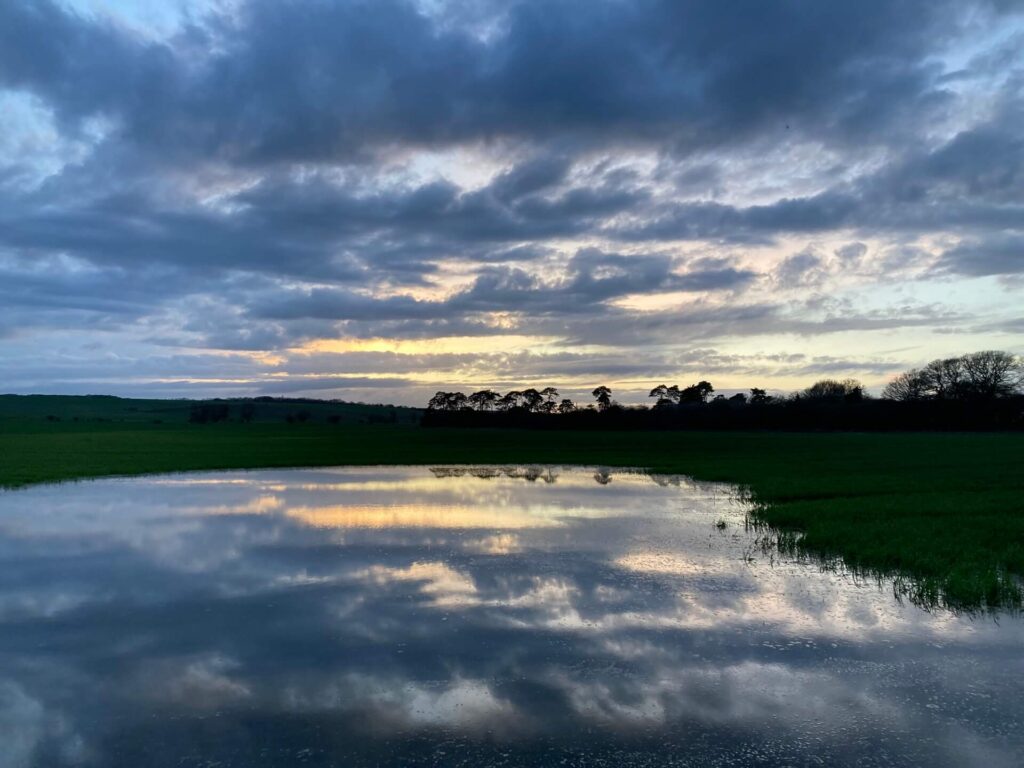
About 5 years ago, I took part in a workshop led by Emma Haughton and Lisa Westbury of Generate, where they shared their model for thinking about the creative process as a dynamic cycle (Creative Dynamics).
At the time, I was in the thick of early Long Covid, with demoralising fatigue and terrible brain fog, as well as a host of other worrying symptoms. So much of my creativity felt out of reach and I was not certain it would return. Unwilling to just push through (which was essentially impossible for me physically and mentally anyway), I was looking for ways to engage with creativity obliquely. If I couldn’t make or create in a conventional way, then understanding it more, learning about my personal flavour of creativity, felt like an accessible alternative.
Although the first 6 stages of the Creative Dynamics framework (Inkling, Saying Yes, Experimenting, Planning, Doing, Ending) felt particularly active, and therefore not something I felt able to do, the final stage in the process – the Fertile Void – quite accurately described my situation. And in that I found such relief.
In the years since, as I’ve combined my creativity inquiry with learning about somatics, ecosystems in the more-than-human world, liberatory thinking, grief and soul work, I realise that the fertile void is an aspect of the creative cycle that doesn’t get tended to very much, because it touches on places our overculture wants us to avoid, but which are vital and necessary.
Cycles of creativity
I really enjoy how granular the Creative Dynamics model is, how it teases apart the various places we might go during the evolution of an act of creativity. With so many small stages where it might seem like not a lot is happening, there is so much scope for slowing down and learning to notice what that actually feels like when we are in it. Noticing which parts of the cycle might feel easy, familiar or exciting – that we might love to be in – and those that feel challenging, uncertain, worrying – that we might like to rush through or avoid. Being curious about the process and finding out what resources or support we currently have or might need to develop to help us with this journey.
This isn’t the mainstream way of thinking about creative work, where the common model for the creative cycle is one of Idea → Development → Execution. Sometimes, if we’re lucky, it might include a period of evaluation or reflection at the end, but often this is about increasing efficiency or productivity the next time around, or maximising learning and growth.
“What’s next?” is what we get used to asking as soon as the work is ‘done’, before we’re ready, before things have settled. We are expected to know the answer to this as soon as the current creative act or project has ended (or better still, while it’s still happening). The possibility of uncertainty or unknowing is not really acceptable.
What is the void?
The void is all about uncertainty and not knowing. It’s a space which might look empty and dark, and yet things are happening, or about to happen. There are many explorations into the concept of the void (spiritual, philosophical, artistic, scientific) and, whichever way you look at it, the void holds so much possibility and wonder — things are not as you might expect, the emptiness is a misdirection, the darkness is subjective. It would be easy to be wary of the void, to only see its vastness, how things might get lost in there, but I think the void is asking us to widen our gaze and take in all the ways that darkness and emptiness are important aspects of the nature of everything in the universe: darkness as necessary for things to happen. Darkness as the place where things compost, germinate. Darkness as incubator.
I’m reminded of the words of Valarie Kaur: “The future is dark. What if this is not the darkness of the tomb, but the darkness of the womb? What if this is our greatest transition?” And of Francis Weller’s concept of The Long Dark and the initiation of humanity during these times of collapse. But as this essay is already pretty long I’m not going to go further into this particular darkness tangent today.
But capitalist, colonial structures don’t want us facing the dark, or even acknowledging that it exists. We are directed away from facing our personal and collective shadows. Mainstream spirituality with its focus on ‘love and light’ contrasts with the soul work of allowing a descent into darkness and being prepared to face what is there. There may be a belief that people will be sucked down into something they can’t get out of, if they allow themselves to pause and to listen to what emerges when everything is still. Better to focus on moving up, seeking the brightness, always growing and expanding.
And, in economic terms, we are not as ‘productive’ (that is ‘consistent’) if we listen to our innate biorhythms (as individual humans, or as part of the vast ecosystems of life) and respond to them. In nature, the fertile void exists as winter, when things go dormant and processes appear to slow or halt. For systems demanding non-stop growth and expansion, fallow periods cannot be tolerated. And since our creativity is part of the capitalist landscape (whether we consent to that or not) it is also subject to this logic.
What happens in the fertile void?
The fertile void is the space between the end of the generative part of one creative cycle and the germination part of the next. It’s when the magic in the soil happens, the composting, the breakdown of things so that they become available as nutrients later. As in nature, these processes are on a molecular level, and so it’s easy to feel like nothing is really happening, especially as we have been conditioned not to pay attention to these small things.
The fertile void is an expanse of indeterminate size. But whereas winter tends to last a similar amount of time each year, the fertile void may well last longer than you expect or want (especially if there are other factors in your context like chronic health issues, disability, burnout or cycles of over-exertion due to caring responsibilities, work demands, grief, and other aspects of living through the polycrisis). It’s impossible to say how much time each person needs to give themselves in this space; my feeling is that even a small amount of time is better than nothing at all.
It can, and often will, feel like shit to be in the fertile void. It’s deeply uncomfortable to be in this place of unknowing. Of allowing being to take over from doing. Of surrendering long enough for parts of you to properly rest and rejuvenate. There is an element of risk to resisting the certainty of the next idea, of wilfully making yourself absent from the productivity machine for a while. That could be why so many of us hop straight over this bit, jumping from the ending of one creative act into the much more pleasant ‘inkling’ phase of the next – it maintains our psychological safety and protects our economic safety. I’m not here to say it will be nice or easy to give yourself time for the fertile void — but it might be necessary.
What happens if we resist the void?
I am not a psychologist, health professional or a somatic practitioner, so I have no data for what I think happens if we resist the void for too long, but this is what I suspect (based on personal experience and having observed my clients over many years):
It is possible for us to push our mind/bodies beyond our capacities for quite some time, and for us to feel like we have that under control or that it’s manageable, until the point where it’s not and we burn out. And many of us treat our creativity the same way – that we must keep pushing forwards, that any stopping or slowing is not helpful (or is impossible). I suspect that creative burnout is the result of this insistence on maintaining momentum, where we keep pushing ourselves past our limits and don’t give ourselves time for regeneration. Then this cycle becomes embedded and repeated, until there is nothing left for us to dredge up, no reserves to draw on, and the only option is stop completely.
By this point the damage that has been done can’t necessarily be tended to by a stay in the fertile void. In fact, this place is not the fertile void at all (despite it having some similarities): this place is a barren void, where the nutrients that feed creativity have all been used up. It is a space of rehabilitation and convalescence, of rebuilding gently and patiently while simultaneously experiencing all the sadness, grief, shame, and frustration that comes with not having access to creativity in a way that used to feel instinctive or easily accessible.
However uncomfortable it might be to be in the fertile void, it’s really not comparable to finding yourself in the barren void. Thankfully, most artists and makers I work with have discovered ways to give themselves time in the fertile void often enough that they maintain the nutrients of their creativity, or find ways to return to it after periods of intense creative activity.
How we can become more comfortable in the void, so that it gets easier to build that into our creative practices? And not just as an add-on in times when we feel depleted and it feels like hard work, but during ordinary times when we have access to capacity and resources and it can become more easeful?
When can/should we encounter the void?
In the original Creative Dynamics model, the fertile void is the last stage of the creative cycle — which makes it sound like this is the only time this can happen: I’d like to challenge this. No doubt making time after a creative act is completed to allow this space will be beneficial, and could be seen as the ideal — but it’s also important that we are able to acknowledge the reality of many people’s situations. It may not always be possible to clear blocks of time after a project due to external demands and responsibilities, but that doesn’t mean that the fertile void can’t be tended to in other ways at other points in the creative cycle. We can hold the tension of allowing this ‘nothing’ period to exist while being aware of the demands of capitalism to work or produce at a regular, consistent pace. But, to do so, we might have to subvert the expectations we have around what that looks like.
There is a flaw in me using winter as a metaphor for the fertile void: it suggests that the fertile void might need or deserve months, just like actual winter. Again, I’m not sure this is true. Even if it were, how many of us can devote months to it? I think it’s helpful to think of it as being like winter, in that we can feel like we are in a period of winter at any point in the calendar year; what that often demands from us is an easing off and slowing down, even for a short period of time.
So with these things in mind – how can we build in space for the fertile void, even if we can’t give ourselves to it completely, or at the ideal time? Here are some ideas:
Nature offers us so many cycles on small and large scales, and we might find that some of these work really well alongside our own rhythms, or are easier to track, honour and maintain. Cycles like sleep cycles, hormone cycles, moon cycles, seasonal cycles.
Ask yourself:
- at what times of day do I feel a natural slowing or have space to allow myself to rest and do ‘nothing’?
- what points in the month feel like I could do this?
- do natural phenomena like celestial bodies, plants or animal kin offer a guide to noticing the dark, quiet times?
- are there parts of the year where I know I can more naturally let myself embrace emptiness and do less? Particular seasons or dates (like the solstices, equinoxes or other seasonal waypoints) that lend themselves to engaging with the void?
We could also look to manmade cycles like weekends or holidays to provide structure for working with the void – these are times that we associate with taking a break anyway, so could be good starting points for deepening the rest and recuperation.
How to get more comfortable in the void
The fertile void is a strange place within the creative cycle because there is nothing to do here. It’s not a space of collapse and disconnection, more a space of active rest, of deliberate and intentional restoration — something many of us have little experience of and no frame of reference for. It can be helpful to have guides. I have some suggestions of my own to share, but I’m also including some links to additional resources that could provide some inspiration and support.
Have no goals, no expectations or outcomes.
Where possible, don’t expect to use this time for anything productive. This isn’t the time for the inklings of new ideas or the research of a new passion. It is literally time away from any of those concerns. Instead consider revisiting old creative loves, play like you did as a kid, spend time doing things you might not have much time for when you’re busy with other creative work. Or, don’t. This time could be for idleness, for losing yourself in daydreams or snoozing. Watching clouds or people. Taking a long bath, going for a walk…
Tend to the human within the practice (and those around them).
What is your body/mind desiring? What care and attention does it need? Is this physical, emotional, soulful? This could also be a great time to care for the other humans in your networks (family, friends, community and beyond) and strengthen/nourish everyone for what is next.
Create the conditions for flourishing to happen later.
The fertile void is the compost for the seeds and plants that are to come later. What ideal conditions does your creativity need?
Reflect on past experiences:
- when have things felt easy or hard and what were the conditions like then?
- what conditions do you already know that you need to nurture your ideas?
- can you make any changes or adaptations to your physical space, the environment you live and work in, that could support you in this? (Bear in mind the impact of things like light, sound, smell, textures etc.)
- what resources do you already have that support your creativity? (This could be things like activities you do, routines or structures, people, places, animals, nature, music, stories etc that you can turn to for inspiration, companionship, solidarity, witnessing.)
- what resources might you still need, or want to enhance?
Support in the fertile void
Rest is Resistance – Tricia Hersey
The 7 types of rest – Saundra Dalton-Smith
Who are you without the doing? – Jocelyn K Glei, Hurry Slowly podcast
An ongoing relationship with the void
Engaging with the fertile void, and making space for it within our creative lives, requires practice. An intention to try, to experiment until we find something that works for us, and then to keep returning to it when it inevitably gets forgotten. It does not need to be anything grand: in fact, I imagine that the smallest fertile void practices will probably be more easeful and less pressure than something ambitious or overly structured.
I wonder if people have been engaging with the fertile void but haven’t realised that’s what they are doing. Those times when it feels like no new ideas are forthcoming, when we are naturally a bit sluggish or reluctant to ‘get going’ with some new work. Often I hear clients or creative friends describe these times as frustrating, periods to endure or get through until the creative mojo returns. But what if this is your creativity trying to claim some slow time, to demand a pause before gearing up for what’s next? What might be possible if, next time that happens, you embrace the emptiness and the not knowing, and let yourself indulge in some intentional inactivity?
This website is AI FREE.
All the text, long form writing, art work and photography were created by me (unless credited).
Sign up to my emails to get seasonally themed reflection prompts & hear more about ways we can work together.