MELODY VAUGHAN
City fragments
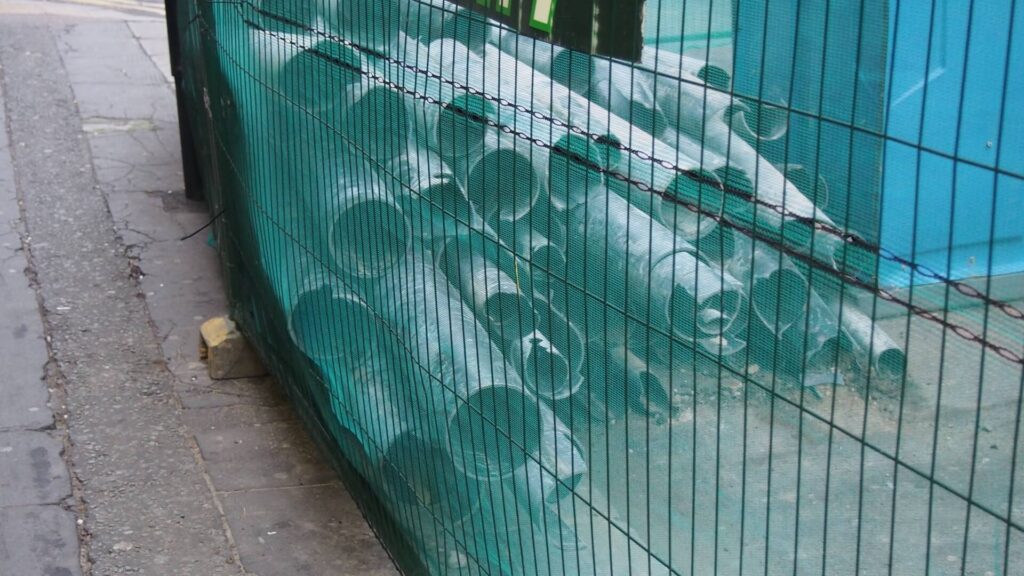
A note on building sites:
They are hives of activity, and I love to watch people work. It is a site of simultaneous creation and destruction, both of which fascinate me. There are usually a number of holes in the ground, controlled glimpses into what is buried underneath. Usually it is just the tarmac topping and the crumbly rubbly filling beneath, a kind of millionaires shortbread, but often there are wires or pipes. Scaffolding and hoardings, accompanying structures with their own short-lived beauty. These are not designed structures, no plans or cad models exist for these; they respond entirely to what is within, and adapt to the changes that take place. I like the sense that these poles and planks have been unpacked and constructed over and over, how many places, how many more? This building site uses yellow for its kit, but I have seen soft peaches, or reds, vivid greens and lilac smudges.
If I were to try to contextualise it, I suppose the building site has much in common with the archaeological dig. Plans are made, trenches are dug, stuff is uncovered, stuff is put back into the holes. But whereas a dig uncovers and then tries to return the ground as if it were never there, the building site creates the new, the archaeological remains of the future. These foundations may exist forever.
(2015)
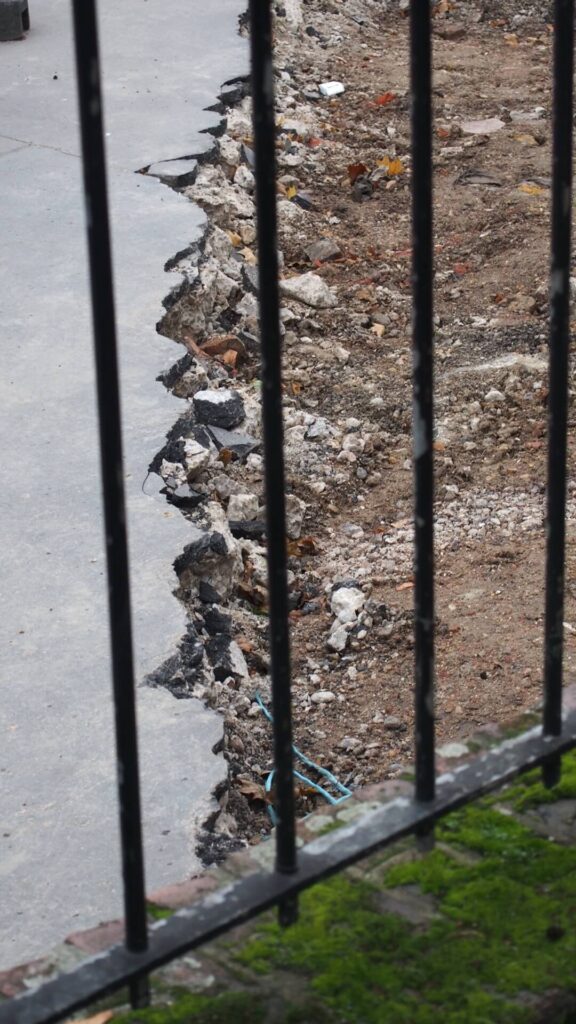
Material fragments: a conversation exploring experiences of the city
I walk. I think things through by walking. I write by walking, allowing words and ideas to work their way in and out of my mind, stimulated by new sights, brought back through the repetition of my feet, a rhythm and cadence found. Walking as experiencing, walking as gathering, walking as imagining, walking as discovering, walking as creating.
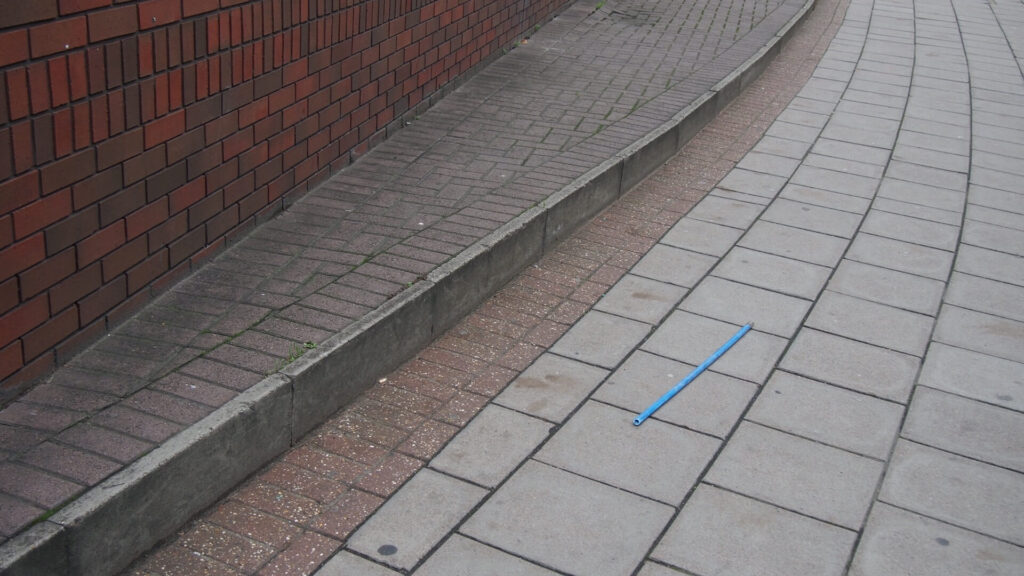
Through the act of walking, I respond to, and document, fragmentary experiences of the City of London. The city as a place where multiple experiences and viewpoints coexist and fluctuate, as a place that may be impossible to define or describe, a place where experiences are fragmentary. I am not only hunting for my reading of the city, I am interested in how other people form their meaning of the city: the city as personal archaeological site, with its own evidence and clues, fragments just waiting to be unearthed. I am interested in fragments as physical things, the remains and remnants, but also as an intangible concept, as moments or impressions. Fragments may seem to be incomplete, but they are completed by our interaction with them.
(2016)
Amsterdam Waterway
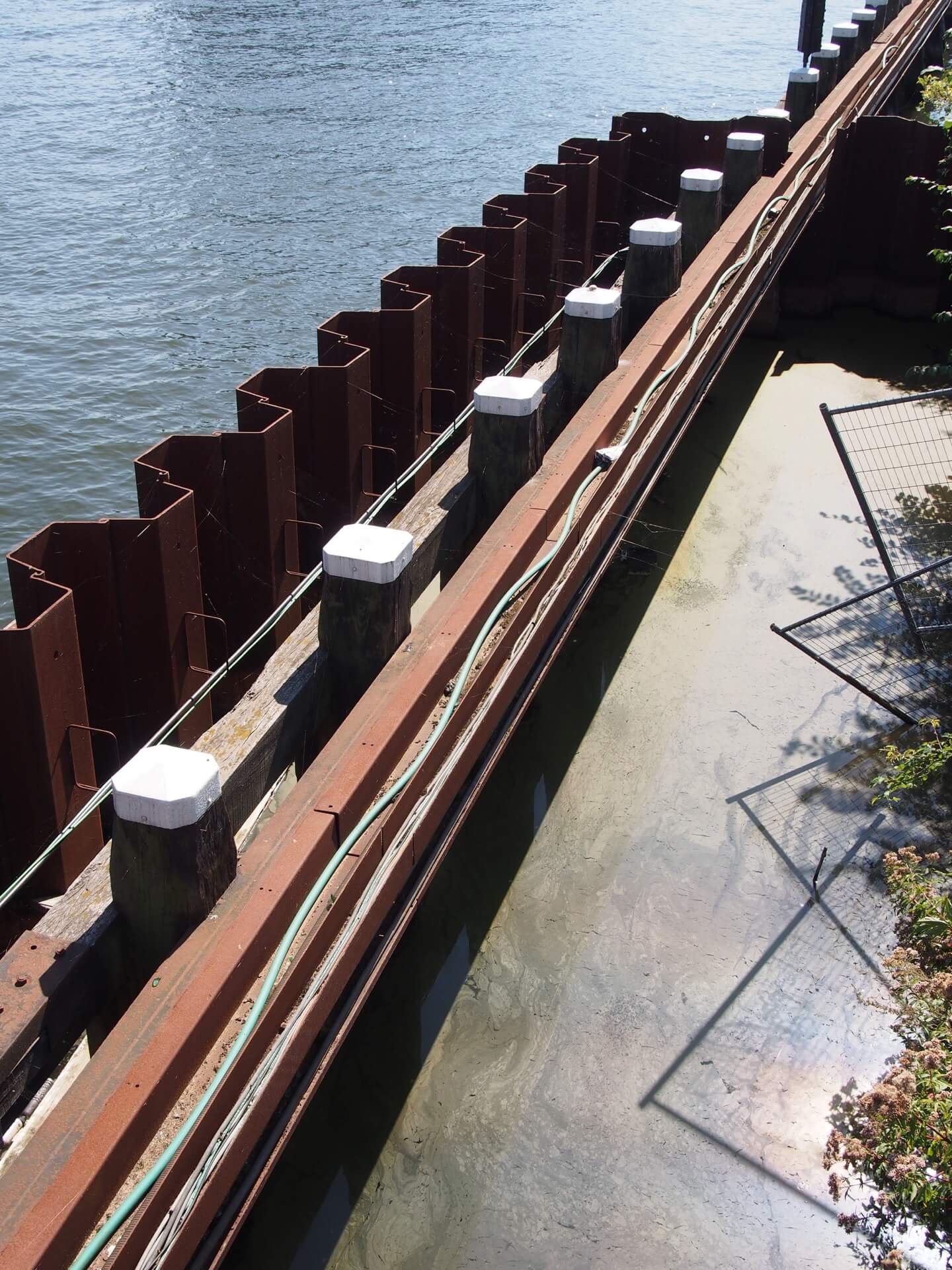
A barrier of corrugated iron separates the blue harbour water from a standing pond-like volume. Its surface is slick and still, there is a layer of something floating on the surface which diffracts the light like the halo around the moon, rainbowy and pale. Behind the iron zipper teeth is a line of wooden posts, topped with slabs of white, they look like extra strong mints that have been squared. More iron, but a paler brown, conduits for lines of wires – palest blues and a wobbly line of aqua green. The bank of the river holds back two metal wire fence panels, which have fallen towards the water, but don’t quite touch. Their regular grills silhouetted on the beigy muck below. The whole scene is one of contrast of colour, texture and materials.
I am aware that it was on this trip to Amsterdam that I began to collect building materials as swatches, reveling in the combinations of stone, metal, glass and wood. There was no better way to record these moments, to remember how the blue of the water sits so perfectly next to the orangey iron. And, predictably, the line of posts, the teeth of the barrier, heading off into the distance diagonally, bisecting the shot, balancing out the areas of colour and surface. The image feels right. This balance, these contrasts, there is nothing unsettling. It is kept interesting by the zigzag of the metal fence and its shadow below – spiky and lightweight in comparison to the barrier, but of a kind with its regular mesh and in-and-out motion.
It was a wonderfully warm afternoon and we were walking around the harbour, peering into the houseboats and the water beyond to the city. I had not completely understood that this was what Amsterdam was like. I had only the postcard version in my head, of medieval narrow houses and canals with boats and bikes. I had not realized that the water flowed out into bigger courses and expanses. That there was so much modern along these fringes, that there were communities of people who were seeking a simple lifestyle away from the picture-perfect tourist attraction. It is so hard when visiting a city like Amsterdam for the first time, not to get carried away by the pretty. To try to see more of the real. But I know that I managed, somehow, to not only see the façade that Amsterdam wears for its guests. When I look through the pictures I took on that trip, so many of them are like this one – aspects of architecture or building materials, light caught on a surface or highlighting a plane. They could be anywhere, and yet they could not. I would know at a glance where they were taken, I could even tell you where we had been walking to get there.
(2017)
This post is part of a series I’m calling archive exploration where I revisit things from my creative practice archive to make sense of them in my current contexts.
This website is AI FREE.
All the text, long form writing, art work and photography were created by me (unless credited).
Sign up to my emails to get seasonally themed reflection prompts & hear more about ways we can work together.